
PLC Systems in Food Processing: How Automation Improves Production and Efficiency
PLC systems for food processing improve automation, efficiency, and control. Learn how IO SCADA helps Modesto food production facilities optimize performance and reduce downtime.
NEWPLC FOOD PROCESSING
PLC Systems in Food Processing: How Automation Improves Production and Efficiency
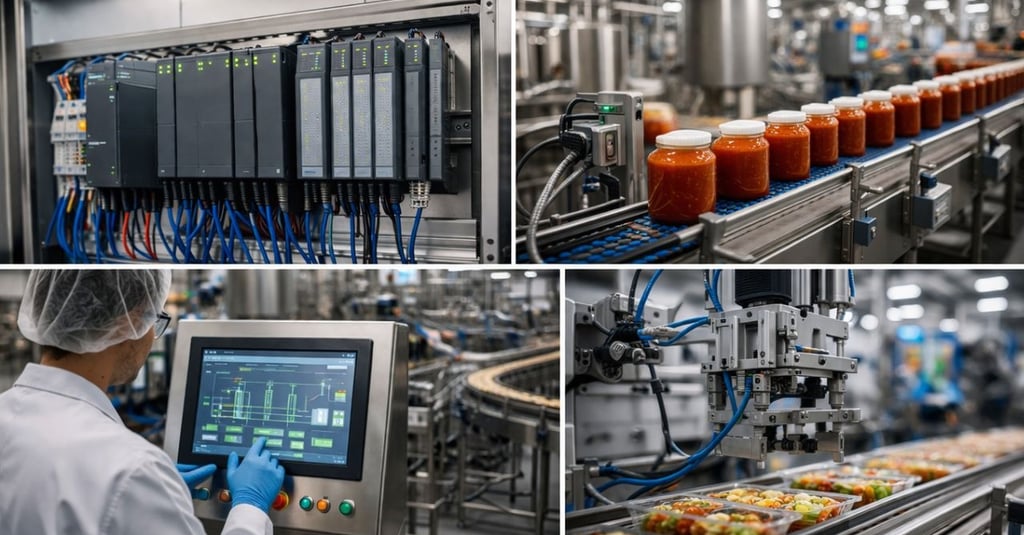
PLC systems in food processing play a critical role in modern industrial automation, helping facilities improve production efficiency, maintain product quality, and ensure compliance with safety regulations. As food manufacturers in Modesto and across the Central Valley face increasing demands for consistency, speed, and traceability, automation has become essential for staying competitive.
Programmable Logic Controllers (PLCs) are used to control machinery, automate processes, and ensure that production lines operate smoothly. When combined with SCADA systems, PLCs provide real-time monitoring, precise control, and data-driven insights that help optimize operations across the entire facility.
In this article, we’ll explore how PLC systems work in food processing, their key benefits, and how IO SCADA helps businesses in Modesto improve production and performance.
What Are PLC Systems in Food Processing?
PLCs (Programmable Logic Controllers) are industrial computers used to control machines and processes in manufacturing and food production environments. They are designed to operate in harsh conditions and provide reliable, real-time control of equipment.
In food processing facilities, PLCs are used to:
Control conveyors and production lines
Manage mixing, cooking, and packaging processes
Regulate temperature and refrigeration systems
Automate cleaning and sanitation cycles
PLCs ensure that each step of the production process runs consistently and efficiently.
How PLC Systems Improve Food Production
Automation of Repetitive Processes
PLCs automate tasks such as filling, packaging, and sorting, reducing the need for manual intervention and improving consistency.
Precision and Accuracy
PLCs provide precise control over critical variables like temperature, timing, and ingredient measurements, ensuring product quality.
Faster Production Cycles
Automation reduces delays and increases throughput, allowing facilities to produce more in less time.
Reduced Human Error
By automating processes, PLC systems minimize mistakes that can impact product quality or safety.
Key Benefits of PLC Systems for Food Processing Plants
Improved Efficiency - PLCs streamline operations and reduce bottlenecks, improving overall production efficiency.
Enhanced Food Safety and Compliance - Automation ensures processes meet FDA and industry standards by maintaining consistent conditions and accurate tracking.
Reduced Downtime - PLCs help detect issues early and allow for faster troubleshooting, minimizing production interruptions.
Scalability - PLC systems can be expanded as your production grows, making them ideal for long-term investment.
PLC and SCADA Integration in Food Processing
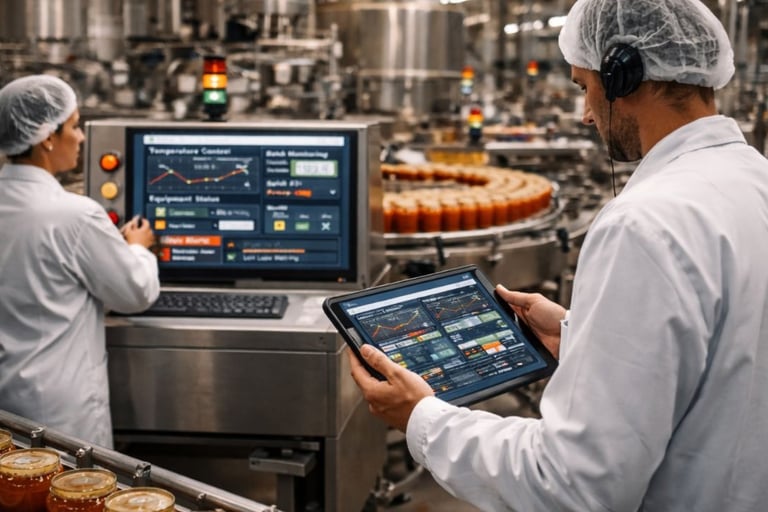
While PLCs control individual machines, SCADA systems provide a centralized platform for monitoring and managing the entire operation.
Together, PLC and SCADA systems allow food processing facilities to:
Monitor production in real time
Analyze performance data
Control processes remotely
Improve decision-making
This integration creates a complete automation system that enhances visibility and control.
Real-World Use Cases in Food Processing
Temperature Control Systems - PLCs regulate cooking, cooling, and storage temperatures to ensure food safety.
Packaging Line Automation - Automate labeling, sealing, and packaging processes for higher efficiency.
Batch Processing - Ensure accurate ingredient measurement and consistent production across batches.
Sanitation and Cleaning Systems - Automate cleaning cycles to maintain hygiene standards and reduce manual labor.
How IO SCADA Helps Food Processing Facilities in Modesto
IO SCADA provides advanced PLC programming and industrial automation solutions for food processing plants in Modesto and the Central Valley.
Custom PLC Programming - We design and program PLC systems tailored to your specific production processes.
SCADA Integration - We integrate PLCs with SCADA systems to provide real-time monitoring and control.
System Upgrades and Modernization - We help upgrade outdated systems to modern, efficient automation platforms.
Ongoing Support and Optimization - Our team provides continuous support to ensure your systems operate reliably and efficiently.
By working with IO SCADA, food processing businesses gain improved visibility, better control, and more efficient production systems.
Get Started with PLC Automation
If your food processing facility is looking to improve efficiency, reduce downtime, and enhance production control, PLC systems are a critical step toward modernization.
Why Choose IO SCADA in Modesto, CA
Local expertise in industrial automation
Over 20 years of experience
Specialized solutions for food processing
Reliable PLC and SCADA integration
Focus on efficiency, safety, and compliance